

Sheep came into our lives when we moved from a 1 acre garden halfway up a Chiltern hill to a small farm on the Thames Plain. We found ourselves with some 20 acres of permanent pasture (previously a stud and home to some very successful racehorses) and nothing to eat the grass. Sheep were mentioned and so a small flock of Jacobs arrived. Jacobs are a very handsome breed with a jigsaw puzzle of brown and white wool, and horns. some have 4 horns – ours had 2 – like the handlebars of a bicycle. It was a steep learning curve, even though I went on a number of Sheep Management Courses – there is nothing like having to tackle your first tricky lambing at one o’clock in the morning, to make you realise the vast difference between the classroom and reality!
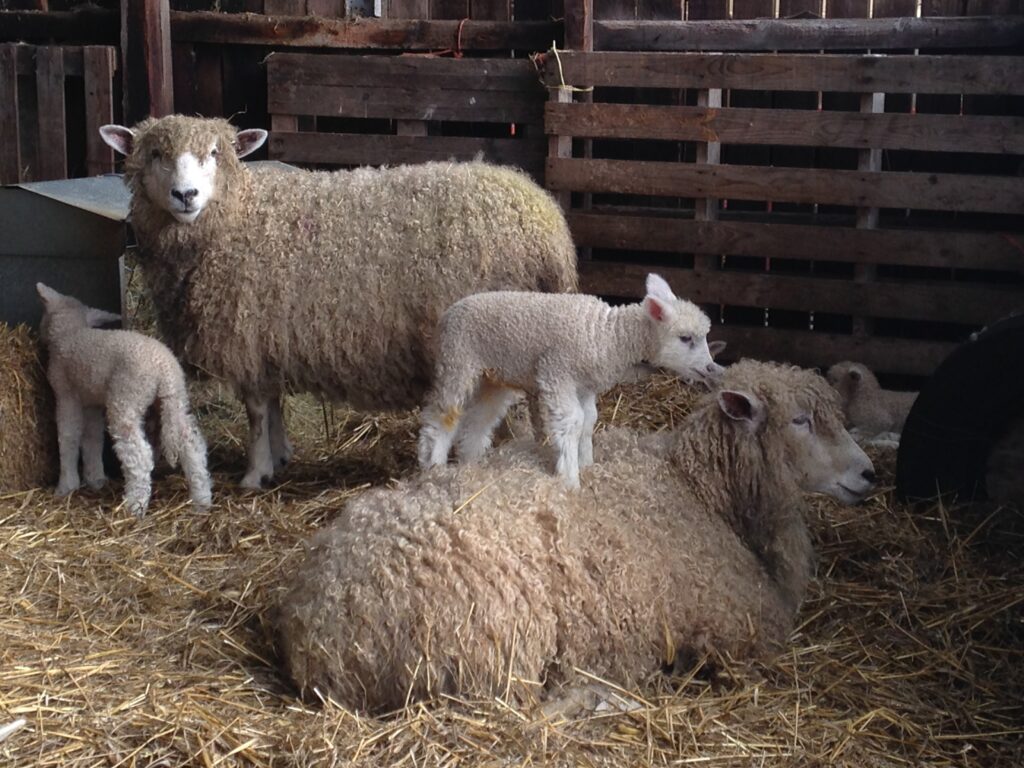
Why Cotswolds? We became aware of Cotswolds when we went to Stoneleigh in the days when they still hosted the Rare Breeds Show. We admired the sheep on the Cotswold Sheep Society stand – they were magnificent with their heavy fleeces of lustrous crimped wool, distinctive forelocks, their calm eyes and mouths which turned up slightly at the corners so they always seemed to be smiling. It also appealed to me that as we did not have enough land to farm commercial sheep, that we would instead help to preserve a breed that was (and is) on the RBST Watch List, which means they are At Risk of extinction.
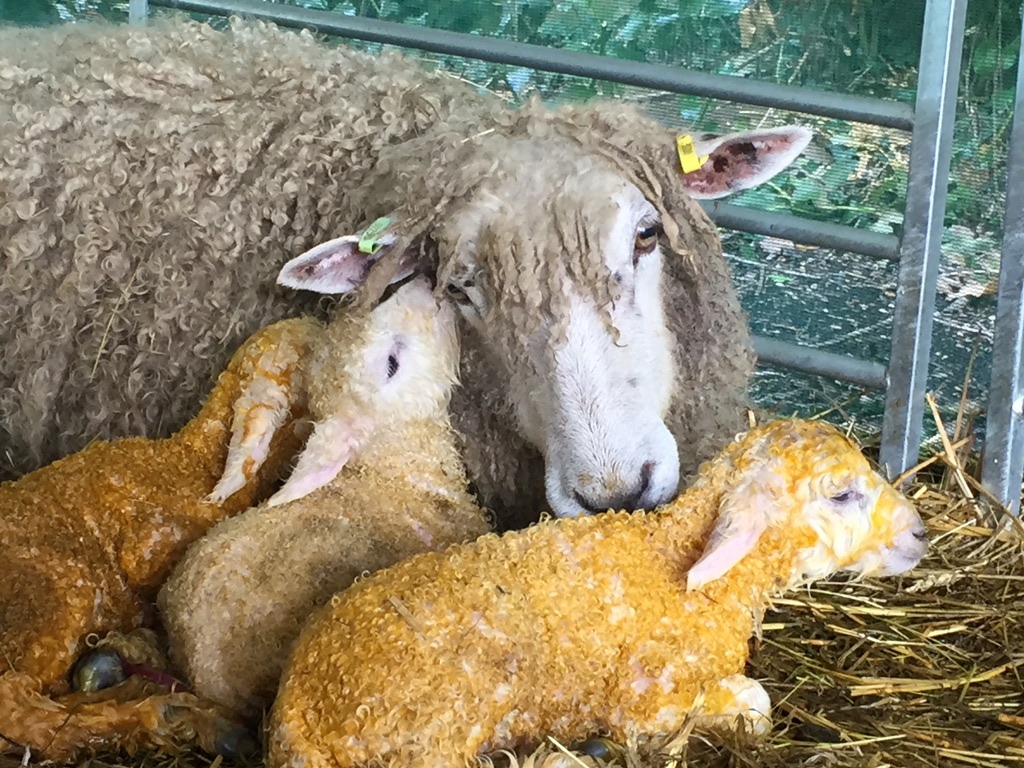
The first pedigree Cotswolds arrived at Queenford in the autumn of 2000. They were already in lamb and in the spring that followed we had 7 Cotswold ewes in the lambing barn. It was now 2001 and we watched in horror as the Foot and Mouth disaster unfolded across the country. We were all too aware of how an outbreak of the disease in the Cotswold Hills, where the majority of the breed are still farmed, would devastate an already threatened breed. Perhaps it was the fear of losing them that has made our Cotswold sheep such an important part of our lives at Queenford.
Cotswolds are ‘sensible’ sheep. They are excellent milky mothers, generally easy lambers, and have an average lambing percentage of around 165%. They are easy to handle as they will follow a bucket of feed anywhere! Cotswolds are one of the largest British breeds with fully grown ewes weighing between 80 – 100kgs, and rams weighing up to 140kgs. The lambs are very attractive and extremely playful. All the best ewe lambs, which must meet the Breed Standard, are kept in our flock, or sold for breeding. The remainder join our Lamb Box Scheme. We only keep a couple of the very best ram lambs each year.

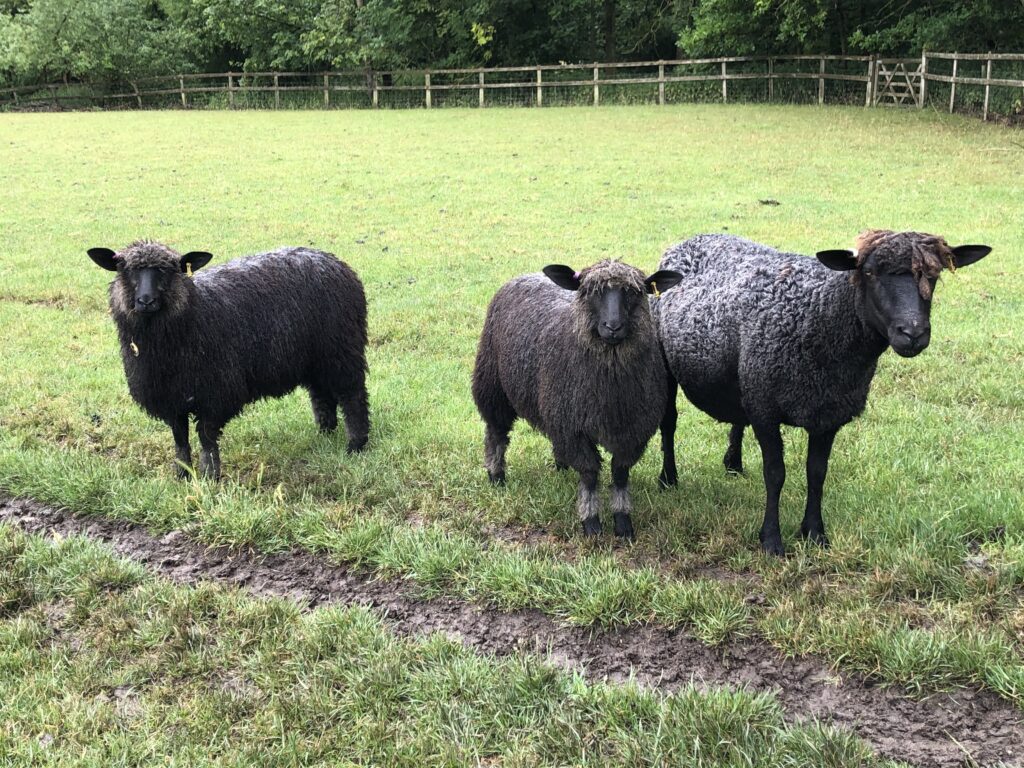
Our Jacob ewes remained in the flock but were crossed with a Cotswold ram and we call them Jawolds. The first generation lambs were always brown, but later generations could be brown or white. Brown ewe lambs have generally been kept, and we have about 8 of these lovely ewes whose wool is much in demand by spinners.
We now have a ‘large flock’ of around 30 Cotswold ewes and 8 Jawold ewes. We very much enjoy some showing each year and now do reasonably well in Cotswold classes. Moreton Show 2021 was our most successful show so far!
We do sell limited numbers of pedigree breeding stock from the farm. We also send sheep to the Cotswold Sheep Society’s Show and Breed Sale which takes place each year, usually in early August.
I have been a member of the Cotswold Sheep Society Council for more than 12 years and am currently (in 2022) Chair of the Society. Sometimes, it is not enough just to have the sheep, you have to get involved with the Breed Society too, and that can be immensely rewarding!
Moreton in Marsh Show 2021


